A Late-Season Tidy-Up That Keeps Garden Materials in Use
A late-season garden tidy-up helps you sort pots, supports and labels for storage, so sound materials are ready to use again next growing season.
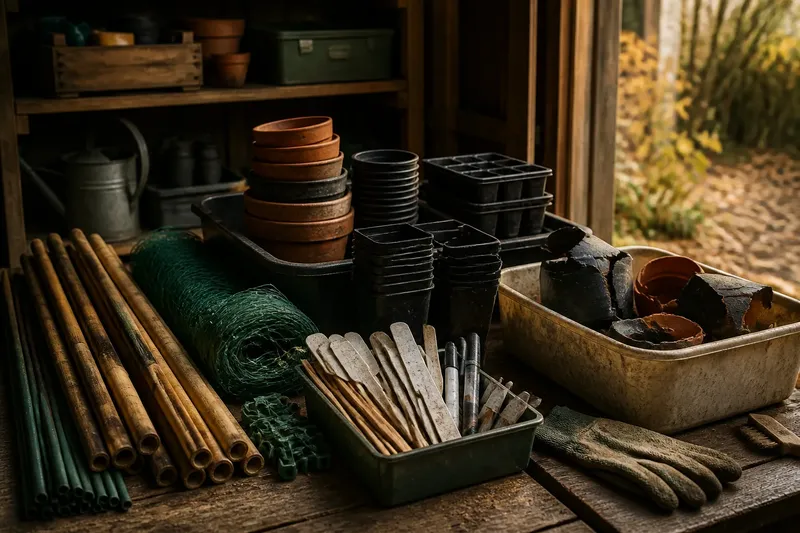
The most common late-season tidy-up mistake is putting every pot, cane and label straight into a shed corner; it costs you time next spring, when sound items are buried among broken ones and damp debris. A late-season garden tidy-up works better as a sorting job: gather materials by type, clean what is reusable, and set aside anything that needs repair or disposal.
Choose a dry spell after the main harvest, when beds are no longer crowded with plants but before persistent wet weather makes handling muddy equipment unpleasant. Work in short passes, beginning with items still attached to plants and finishing with pots and labels. This order clears growing spaces while keeping the sorting area manageable.
Start with supports still in the beds
Collect bamboo canes, metal stakes, hoops, netting and plant clips as crops finish. Remove twine and plant stems before moving supports; old growth can hide a split cane or a bent joint, and tangled netting is easier to inspect on the ground.
Separate supports by material. Set straight canes together, stack sturdy metal stakes apart from hoops, and coil netting loosely so it is less likely to snag. Check each item for damage that affects its use, such as sharp splinters, cracked joints or torn mesh.
Say you have a bean frame with several sound canes, a frayed length of netting and a few clips tangled in the vines. Remove the clips and put them with the usable ones, keep the sound canes together, and discard or repurpose the damaged mesh only if it can still serve a suitable purpose. You finish with a clearly usable support bundle rather than a knot of mixed material.
Sort pots and trays by their next use
Bring empty pots, seed trays and modules to a surface where you can see their condition. Shake out loose compost and plant remains, then group containers by type and size. This makes it easier to spot a cracked rim or a tray with missing cells without repeatedly shifting a mixed stack.
Keep containers that remain stable and drain freely when used as intended. Put cracked plastic, brittle terracotta and warped trays in a separate review pile; a split may make a pot unsuitable for carrying, though it might still work as a sheltered outer container or for storing loose garden bits. Do not keep damaged items merely because they might someday be useful.
Brush away dry material first, then wash containers with water and a suitable brush where needed. If a plant had a serious disease problem, avoid carrying residue into clean containers and follow appropriate plant-health guidance for cleaning or disposal. Let washed pots dry before stacking, since trapped dampness can encourage musty smells and make materials harder to inspect later.
Make labels readable before they disappear
Gather plastic labels, wooden markers and reusable tags in one place. Separate labels that can be read from those whose writing has faded, and remove soil from the surface so you can decide whether the old mark can be erased or covered.
For a reusable plastic label, try a damp cloth or gentle scrubbing before choosing a new writing surface. If permanent marker remains, reserve that label for a plant whose name can be written on the reverse, or set it aside if the surface is too crowded. Wooden markers that have softened, split or become difficult to clean are poor candidates for another season.
Put blank or legible labels together in a small box, with pens stored separately if their ink and storage needs differ. Clear labels are useful only if they stay identifiable, so avoid mixing them loose in a drawer with clips and twine.
Clean, repair and store each group
Once the first sort is complete, give each reusable group a practical finish. Wipe metal supports dry, brush soil from canes, and coil netting without pulling it tight. Store small clips, ties and labels in separate containers so they remain easy to find.
Use a shelf or lidded box for dry, clean pots, leaving fragile containers where they will not be crushed. Keep long supports together along a wall or in a rack, and place netting where rodents, sharp tools and heavy objects are less likely to damage it. A simple label on each storage group can identify its contents without creating another pile of loose markers.
Repair only what can be made reliably useful with ordinary garden maintenance. Replace a missing pot saucer or sort a bent stake for a different task, but do not improvise repairs to equipment where failure could cause injury. For products with particular cleaning, storage or disposal requirements, follow the maker’s instructions and local rules.
Decide what should leave the garden
Make a final pass through the review pile. Ask whether each item has a clear next use, whether it can be stored without creating a hazard, and whether it is worth the space it takes. If the answer is no, remove it from the storage area rather than letting it drift back into the reusable pile.
Clean, intact materials may be suitable for sharing with another gardener or passing on through a local reuse group. Separate recyclable items according to local collection rules, and dispose of contaminated or unsuitable materials through the appropriate route. Keep plant waste apart from equipment while making these decisions, especially where diseased material is involved.
What should you store for another season?
Can plastic pots be reused?
Many sturdy pots can be used again if they remain stable, clean and able to drain. Remove damaged ones from ordinary planting use, and keep only those with a clear alternative purpose if you have room.
Should bamboo canes be kept outside?
Store sound canes in a dry, sheltered place where they can be kept together and are not likely to become a trip hazard. Discard or repurpose split, heavily softened or unsafe canes rather than mixing them with the sound bundle.
How should garden labels be stored?
Clean and dry reusable labels, then keep them in a small container separated from ties and clips. Set aside faded labels only if there is a practical way to make their writing legible again.
When is a garden tidy-up best done?
Choose a dry interval after crops have finished and before wet conditions make equipment muddy or awkward to handle. If some plants or supports are still in use, leave those in place and return to them when their growing season ends.
A late-season garden tidy-up is complete when the next season’s useful materials are clean, visible and stored by type, while damaged clutter has left the working space. Keep the smallest items near the place you are most likely to use them, and your first planting tasks can begin without another search through the shed.