Raised Bed or Ground Plot: What Each Makes Easier
Raised bed or ground plot? Compare access, materials and paths to choose a growing area that fits your garden and leaves room to tend it.
The common mistake when choosing between a raised bed and a ground plot is to compare only the planting surface. A bed may be easy to reach but take up room for its sides and paths; a ground plot may use space efficiently but be awkward to approach. The right choice depends on the site and how you need to move through it.
Before marking out a growing area, compare its footprint, access and materials. A raised bed holds soil above the surrounding ground, while an in-ground plot is planted directly into existing soil.
Raised beds make access easier to define
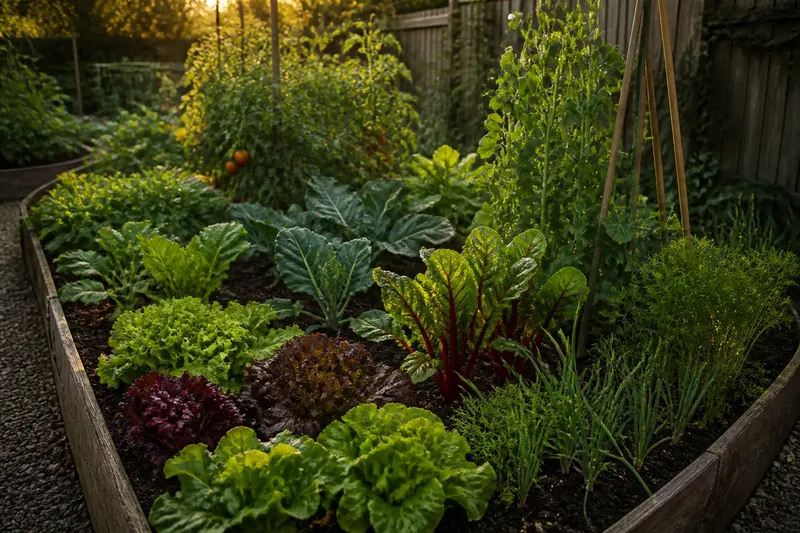
A raised bed gives the growing area a clear edge. You can reach in from a path without stepping on the soil, keeping the planting surface separate from walking routes. This can suit a compact garden where plants, tools and household traffic share space.
Access depends on the bed’s width and position, not just its height. A bed approached from both long sides can be wider than one set against a fence, where you can reach only from the front. Keep the far edge within comfortable reach rather than choosing a width simply because it looks tidy on paper.
Raised sides are easy to see beside grass or paving, but the structure occupies ground beyond the soil it contains. Boards, corners and a path all need room, so mark the full outline before buying materials.
Ground plots use existing soil and boundaries
An in-ground plot can make efficient use of an open patch because it needs no walls. You can follow a fence line, use a curved edge or extend a planting area without fitting a frame to every change in shape.
Its accessibility depends on the route and the ground surface. A level, firm path can make regular work straightforward, while muddy ground or a narrow approach can make carrying compost and watering equipment awkward. Consider the route as carefully as the planting area.
Ground plots also leave more flexibility to shift the planting boundary later. If you are still deciding how much space to devote to vegetables, mark a proposed curve with a string line or garden hose before breaking the ground.
Materials can influence the shape
A raised bed needs a suitable border, such as untreated timber intended for outdoor use, bricks or another stable edging. The material affects the bed’s footprint, assembly and appearance beside paving or fences. Reused materials may be useful, but avoid anything whose previous treatment or contents are uncertain.
An in-ground plot needs fewer construction materials, though it may still benefit from edging that separates it from a lawn or makes the boundary visible. Edging can be modest; it does not need to form a raised container. If the soil needs improvement, suitable compost or other organic matter may be more useful than building a frame around it.
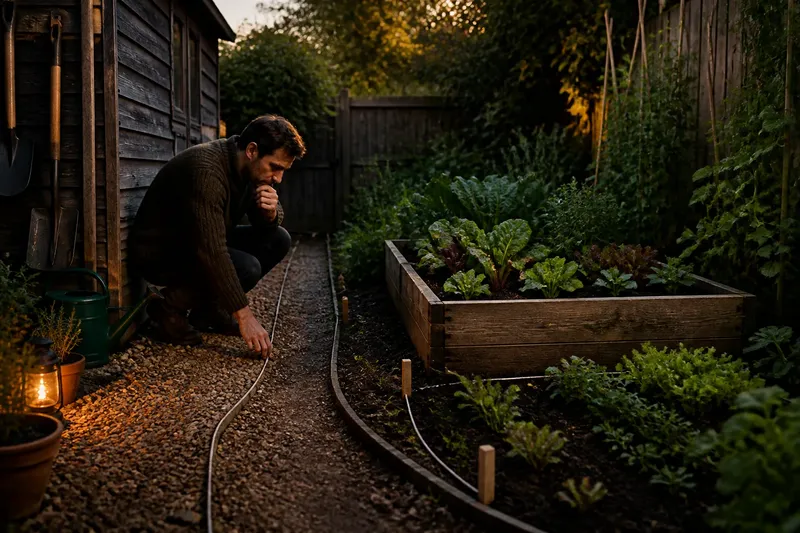
Say you have a narrow sunny strip beside a shed and some sound bricks left from a garden project. If you can reach the strip from both sides, a low raised bed could define it neatly; if one side is blocked, the bricks may use space without improving access, making a ground plot with a clear path a more workable choice.
Paths belong in the growing plan
Neither option works well if the space around it is treated as leftover ground. You need room to turn, carry a watering can, place a bucket and reach plants without trampling the soil. In a small garden, paths deserve as much attention as the beds.
Raised beds make paths visually obvious, especially when their sides contrast with gravel, paving or grass. But several narrow beds may create more edges and walking strips than one broader growing area. An in-ground plot can use a simpler layout, though its paths still need a surface suited to the garden and the work you expect to do.
Sketch the bed and route together, including the gate, tap, compost area and tool storage. A drawing of planting space alone can conceal awkward journeys.
How do access, space and materials affect the choice?
Is a raised bed easier to reach?
It can be, if its height and width suit the person tending it and there is enough room to approach from the necessary sides. A raised edge does not remove the need for comfortable reach across the bed.
Does an in-ground plot need a frame?
No. You can mark a growing area directly in the soil and add edging only if it helps separate plants from a lawn or path. A frame is optional, not a requirement for planting in the ground.
Which option uses less space?
An in-ground plot avoids the extra footprint of raised sides, but paths and access routes still take space. A raised bed can work well in a small garden if its clear boundary helps prevent other uses from crowding the planting area.
What should I check before choosing materials?
Check what the material is made from, how it will sit on the site and whether it is suitable for contact with garden soil. If suitability depends on a product label, manufacturer instructions or local rules, follow that guidance.
Mark both layouts before choosing
Use string, a hose or removable stakes to mark each option at full size. Include the outer edge of any proposed bed, not just the soil inside it, and keep the paths marked while you assess the layout.
For each check, decide what to do according to what you observe:
- Check whether you can reach the planting area from the sides the layout allows; if you can reach it comfortably, keep the layout, but if not, narrow it or change its position.
- Check whether there is a clear route from the entrance to the plot; if the route is unobstructed, keep it, but if it is blocked or awkward, reroute the path before planting.
- Check whether raised sides leave enough room for a path or another garden use; if they do, keep the bed outline, but if they do not, compare a smaller bed with an in-ground plot.
- Check whether existing edging or construction materials are suitable for garden soil; if their material and history are clear, consider using them, but if either is uncertain, choose a known suitable option or omit the frame.
- Check whether you can carry tools and soil improvements along the route; if the journey is manageable, keep the route, but if it is not, move storage or the plot closer to the entrance.
- Check whether the proposed boundary fits the available ground; if it follows the site without obstructing access, keep it, but if it creates a pinch point, reshape the plot or use an in-ground boundary.
Imagine you have a narrow strip beside a shed, can reach it only from the front, and need to keep a route clear to the garden tap. First, mark a raised bed’s full outer edge with string and leave the tap path visible. Next, mark an in-ground plot within the same strip; if the bed’s far edge proves awkward to reach or its sides intrude on the route, choose the ground plot and retain the clear path. If both layouts leave comfortable access, choose between the defined edge of the bed and the flexibility of the ground plot.
For a raised bed or ground plot, choose the plan that leaves a usable growing surface and a route you will actually take. The main search phrase, raised bed or ground plot, is a useful comparison to revisit when you mark the full footprint rather than judging the planting area alone.