The Neat Row Myth: When Mixed Planting Helps
Mixed planting helps awkward vegetable beds support varied crops; learn to combine plants by light, water and harvest timing while keeping growth manageable.
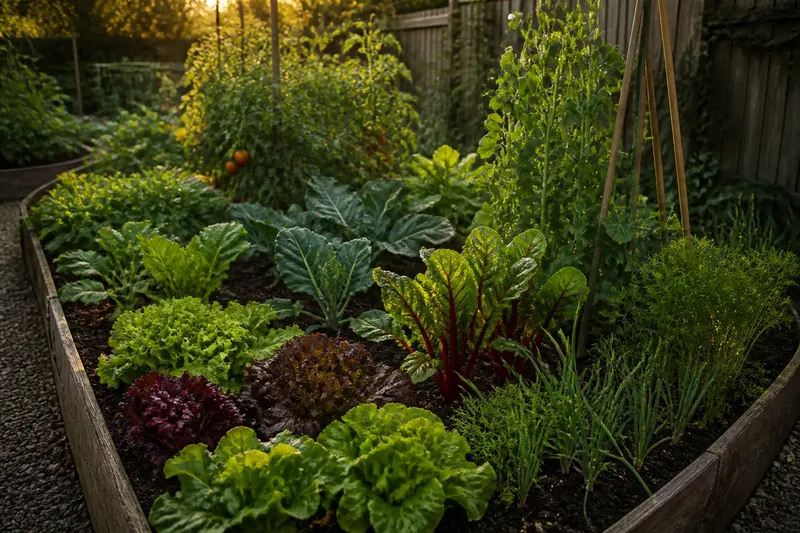
The common mistake with mixed planting is filling every bare patch with another crop; the cost is competition for light, water and room to grow. A bed can hold several kinds of vegetables without turning into a tangle, but each choice should account for what its neighbours need and when they will be harvested.
Mixed planting suits beds with varied growing conditions
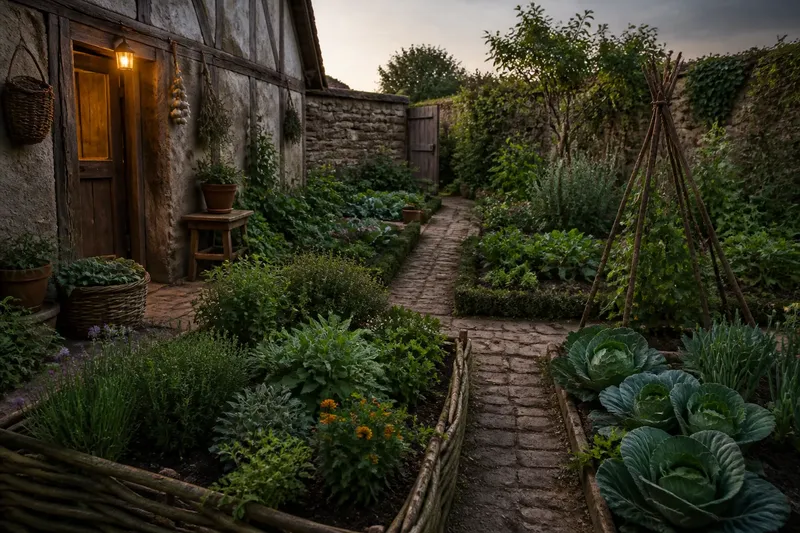
Mixed planting means growing different crops in the same bed or growing area. Unlike a uniform row, it lets you group plants according to their needs, so a sunny section can hold sun-loving crops while a naturally shadier edge suits plants that tolerate less direct light.
It is not the same as scattering seeds wherever soil is bare. Each crop needs suitable light, water and growing room, and its neighbours should not make those needs difficult to meet. The useful starting point is to notice how conditions vary across the bed, rather than treating every patch as identical.
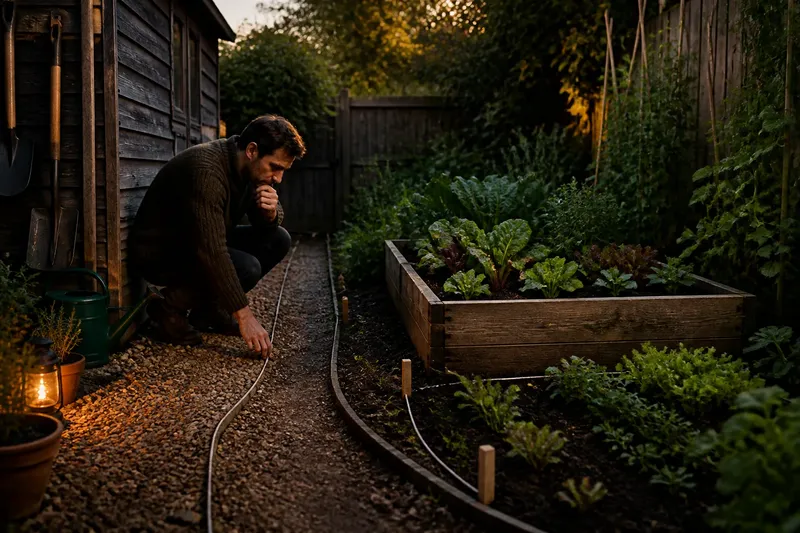
Imagine a bed with a sunny middle and a cooler strip beside a fence. You could place crops that need stronger light in the middle and a shade-tolerant leafy crop along the fence; the observable result to look for is that both groups receive conditions suited to their growth, without one crowding the other.
Choose crops by growth habit and harvest timing
Before combining vegetables, consider how they occupy space and how you will use them. Upright crops, low-growing plants and climbing varieties can share a bed if their mature spread and light needs are compatible. Harvest timing matters too: a crop that is removed early may leave room for another to develop later.
- Upright crops: Check the plant label for mature height and whether the crop casts significant shade; if it would shade a neighbour that needs full sun, place it elsewhere or choose a shorter crop.
- Low-growing crops: Check the expected spread; if leaves would overlap nearby seedlings, leave more room or select a more compact variety.
- Frequently harvested crops: Check how often you will pick them and whether you can reach them without disturbing other plants; if picking would damage a neighbour, move the crop to an outer part of the bed or choose a different pairing.
- Whole-plant crops: Check whether you will cut or lift the whole plant; if removal would disturb neighbouring roots, give it a separate patch or pair it with a crop that will be harvested earlier.
- Climbing crops: Check the support’s position and the plant’s likely spread; if it would shade or cover another crop, place the support at an edge or choose a less vigorous climber.
- Crops with different water needs: Check seed packets or plant labels; if one crop needs consistently moist soil and its neighbour prefers drier conditions, grow them separately or use a watering arrangement that can meet both needs.
Seed packets and plant labels are useful for expected size and growing conditions. Treat them as planning guidance, then leave enough room for the plants to develop rather than judging by the size of young seedlings.
Group plants around soil, light and water
Mixed planting works best when neighbouring crops can share the bed’s basic conditions. Note which areas receive the most sun, where water tends to collect, and whether any part of the bed dries out sooner. Those observations help you place crops without relying on claims that particular plants have special effects on one another.
Say you have a narrow bed that widens into a rounded end, with the wider section getting more sun. You could reserve that section for a crop that needs brighter conditions, then put a shade-tolerant leafy crop near the fence. The result to look for is a clear difference in placement that reflects the bed’s conditions, rather than an arbitrary mix of seeds.
When two crops have sharply different needs, separate them into distinct patches or containers. That makes it easier to water and tend each group appropriately.
Use harvest timing to keep the bed productive
Some crops are ready to pick while others are still growing. Pairing an early harvest with a slower crop can make use of changing space, provided the first crop can be removed without damaging the second. Check the expected harvest period and growth habit on the seed packet, and avoid sowing a quick crop so densely that it competes with its neighbour before harvest.
For instance, imagine a gardener has a patch of fast-growing salad leaves beside a slower crop. They sow the leaves in a distinct strip, pick them as they become ready, and leave the neighbouring crop undisturbed. The expected observable result is that the strip gradually opens up while the slower crop continues growing.
Harvesting should not require pushing through brittle stems or pulling at a neighbouring plant. If a crop must be lifted or cut at the base, leave a clear working space around it or choose a pairing with different harvest dates.
Keep the planting pattern easy to identify
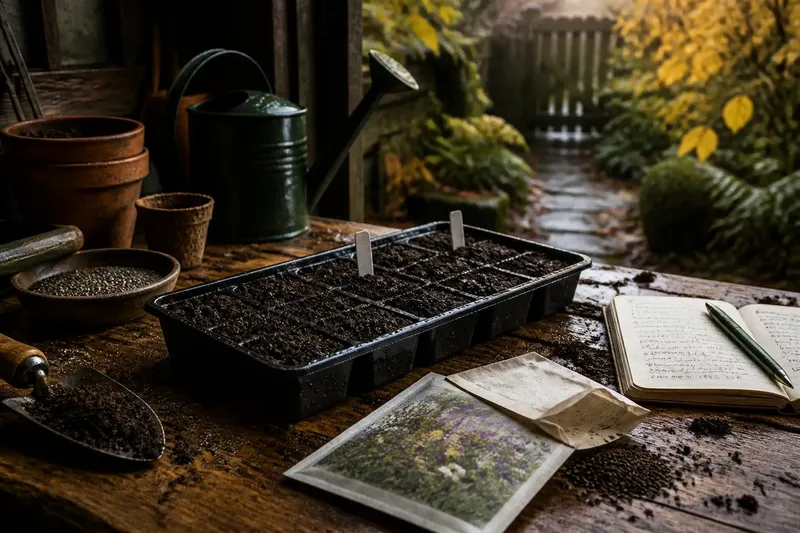
Young seedlings can look alike, so mark each patch with a plant label and write the crop name on it. A simple sketch can record where each variety was sown, making it easier to distinguish crops from weeds and to avoid sowing into a patch that is already occupied.
Leave uncertain gaps open until you know how widely the plants will spread. If you add a short-lived crop, check that it can be harvested or removed without disturbing the longer-growing neighbour; otherwise, leave the soil unplanted for now.
As plants grow, look for signs that the arrangement needs adjusting: leaves covering a neighbour, seedlings struggling in shade, or soil drying out too quickly in one patch. Thin, harvest or move plants where appropriate, and change the pairing next time if the conditions cannot be managed together.
What should you check before mixing crops?
Can different vegetables grow in the same bed?
Yes, if their light, water and spacing needs can be met in the same area. Check the plant labels and expected mature size before grouping them, and separate crops whose needs conflict.
How can I tell whether a crop will shade its neighbour?
Check the crop’s expected height and the direction of sunlight across the bed. If a taller plant would shade a neighbour that needs strong light, move it to a position where it will not block that light or choose a shorter crop.
How do I prevent mixed crops from competing?
Compare their mature spread and growing requirements before sowing, and avoid placing dense or vigorous plants beside small, slow-growing seedlings. If one plant starts covering another, thin or harvest it when appropriate, or separate the crops in a future planting.
Is mixed planting the same as companion planting?
No. Mixed planting describes growing different crops in one area, while companion planting usually means choosing particular neighbours for an intended interaction. A mixed bed can be planned around light, water, space and harvest timing without relying on claims about special plant partnerships.
Choose a layout that fits the crops
Straight rows remain useful when they make sowing, weeding or harvesting straightforward. Mixed planting is an option when different parts of a bed suit different crops, not a reason to fill every gap with another plant.
For mixed planting, compare each crop’s mature size, light and water needs, and likely harvest date before sowing. If two crops cannot share those conditions, give them separate patches; a simpler planting plan is easier to manage than a crowded one.
Before sowing, check the bed’s light and soil conditions, then read the labels for the crops you are considering. Matching plants to the conditions already present is the most useful way to make mixed planting manageable.